
.webp)
Overcoming TMT Friction: Optimizing UI Density, API Economics, and AI Authenticity
The Technology, Media, and Telecom (TMT) sector is experiencing severe user pushback and developer friction due to aggressive platform monetization and design shifts. This case study details how to resolve the tension between visual aesthetics and functional density, navigate disruptive API pricing models, and deploy AI infrastructure that preserves genuine human connection without eroding user trust.
Balancing Functional Density & Aesthetic Design
Platform redesigns are increasingly alienating power users by prioritizing visual minimalism over functional utility. The core issues include:
- Reduced Functionality: Platform redesigns increasingly favor visual minimalism over information density, forcing users into constant scrolling and removing previously available features, such as easy post-following or quoting comments.
- Developer vs. User Tension: This creates a recurring tension between design teams optimizing for visual polish and power users who rely on density and functional shortcuts to navigate content efficiently.
- Sustained Pushback: Redesigns that ignore this functional need tend to generate sustained backlash rather than one-time complaints.
We build intuitive digital environments that successfully balance UI density vs aesthetics:
- Addressing User Friction: We proactively resolve low density UI complaints by ensuring essential functional shortcuts remain accessible.
- Preventing Churn: We mitigate platform redesign backlash by maintaining high information density alongside modern visual polish.
- Feature Retention: We provide strategic feature mapping to prevent the why did [platform] remove [feature] outrage that follows poor UI updates.
By prioritizing functional density alongside aesthetic improvements, platforms can:
- Retain Power Users: Keep high-engagement users active by preserving the efficient navigation and shortcuts they rely on.
- Smooth Redesign Rollouts: Prevent viral negative PR and user revolts when launching new platform interfaces.
- Increase Session Lengths: Eliminate the fatigue of constant scrolling, allowing users to consume and interact with content seamlessly.
"Users have complained about 'low density' UIs that require constant scrolling and remove essential features like post-following or the ability to quote comments easily."
Navigating API Paywalls & Third-Party Ecosystem Costs
Aggressive monetization strategies are severely disrupting developer ecosystems. Key friction points include:
- Commercial Unviability: The shift from free or low-cost API tiers to high-scale usage-based pricing has forced many third-party applications and integrations to shut down entirely.
- Developer Exclusion: The new costs are commercially unviable for smaller developers, removing the innovations they bring to the primary platform.
- Massive Contention: The discontinuation of free API tiers has been a massive point of contention.
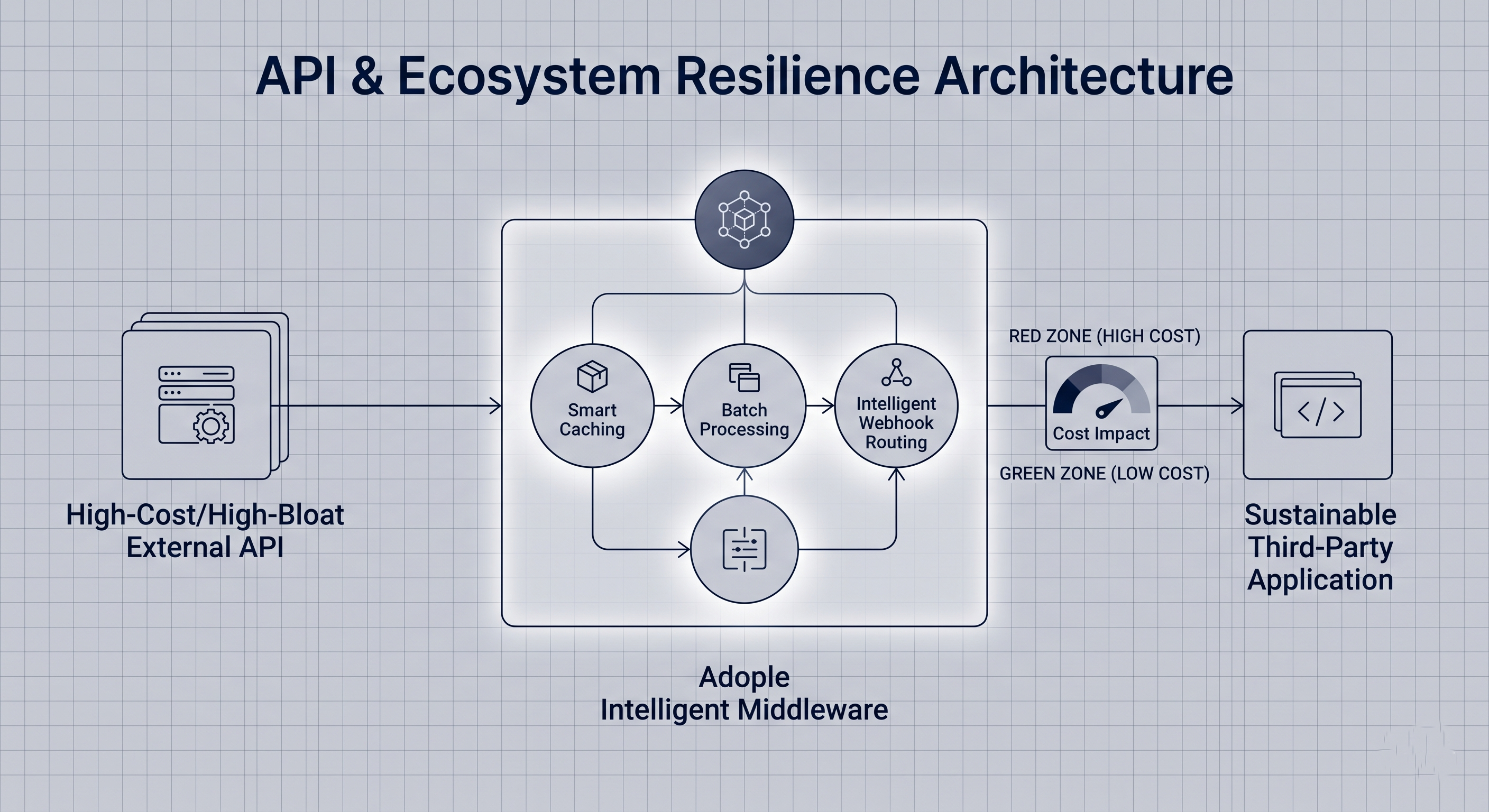
We engineer sustainable integration strategies and middleware solutions to protect third-party margins:
- Cost Optimization: We build efficient data pipelines that drastically reduce API costs third-party app developers face.
- Strategic Migration: We help companies survive an API pricing change shut down app crisis by finding a commercially viable alternative to [platform] API.
- Mitigating Disruption: We actively manage the API tier pricing increase impact through caching, batching, and intelligent webhook architectures.
Optimizing API usage and establishing alternative integration paths allows organizations to:
- Preserve Margins: Prevent unexpected, high-scale data usage fees from destroying the profitability of third-party applications.
- Maintain Integrations: Keep essential ecosystem tools and cross-platform integrations running despite strict paywalls.
- Ensure Developer Survival: Provide small developers with affordable operational frameworks to continue building.
"The discontinuation of free API tiers has been a massive point of contention, forcing many third-party applications to shut down because they could not afford newly introduced, high-scale data usage fees."
Combating AI "Slop" & Preserving Human Authenticity
As AI tools become ubiquitous, platforms face a severe authenticity crisis:
- Backlash Against "Slop": Users are increasingly reacting negatively to visible AI-generated content, perceiving it as low-effort or inauthentic ("slop").
- Demand for Human Connection: Users are actively prioritizing platforms and interactions that preserve genuine, honest person-to-person connection.
- Erosion of Trust: The core issue is not that AI fails to work, but that visible, low-quality AI actively erodes user trust.
We position AI as an invisible infrastructure that enhances, rather than replaces, human capability:
- Authentic Deployment: We bypass the AI slop content backlash by ensuring strict human-in-the-loop content authenticity.
- Invisible Assistance: We configure AI systems to act as backstage support, helping brands completely avoid AI-generated feel.
- Restoring Trust: We relieve AI content detection fatigue by prioritizing honest interactions powered by discrete machine learning frameworks.
Deploying AI as invisible infrastructure rather than a human replacement yields:
- Higher User Trust: Maintain brand credibility by ensuring customers feel they are interacting with genuine human value.
- Better Content Engagement: Prevent users from instantly dismissing content perceived as low-effort or machine-generated.
- Sustainable AI Scaling: Maximize operational efficiency in the background without sacrificing the front-end "human touch" that drives conversions.
"There is a tension between AI-powered optimization and the 'human touch.' Users often react negatively to 'machine-generated slop' and prioritize honest person-to-person connection."
Explore how Adople AI delivers enterprise-ready Generative AI, LLM solutions, and intelligent Multi-Agent Systems through a quick product walkthrough.